

Tucson’s summer monsoons can be spectacular. They can also put a surprising amount of stress on a tree in a very short time. Strong wind loads the canopy while heavy rain suddenly saturates soil that may have been dry for weeks.
Sometimes the damage is obvious: a large limb is on the ground or an entire tree has come down. Other warning signs are much easier to miss.
Work through the checklist below after a strong storm, observing from a safe distance. A few minutes of attention can help you catch a developing problem before it becomes a larger safety or tree-health concern. For background on why desert trees fail in monsoon weather, see our overview of monsoon tree damage in Tucson.
1. Look for Broken, Cracked or Hanging Limbs
Broken branches are one of the most common signs of monsoon damage, but a limb does not have to fall completely to be a concern.
Look for branches that are:
- Partially detached or hanging.
- Split where the limb meets the trunk.
- Resting on another branch, a roof or a utility line.
- Sagging lower than they did before the storm.
- Positioned over a driveway, walkway or other busy area.
Avoid standing or working beneath damaged limbs. Large branches can shift without warning, especially when the wood is still wet or under tension.
2. Check Whether the Tree Is Suddenly Leaning
A tree that has always grown at an angle is different from a tree that develops a new lean after a storm. A sudden change can indicate movement in the root system or the surrounding soil.
Look around the base for raised soil, fresh cracks, exposed roots or a root plate that appears to be lifting. Compare the tree with recent photos if you have them; the change can be easier to see from the same angle.
If a large tree is newly leaning toward a house, road, utility area or frequently used space, keep people away and have the condition evaluated promptly.
3. Inspect the Trunk and Major Branch Unions
Wind can expose weaknesses that were not obvious before the storm. From the ground, scan the trunk and the places where large limbs connect for:
- Fresh splits or newly opened cracks.
- Torn or peeled bark.
- A cavity that looks larger than it did before.
- A major union that has begun to separate.
- Fresh wood showing beneath a branch attachment.
Not every crack means a tree must be removed. The location and severity of the damage, the species, the tree’s overall health and what could be struck if it failed all matter.
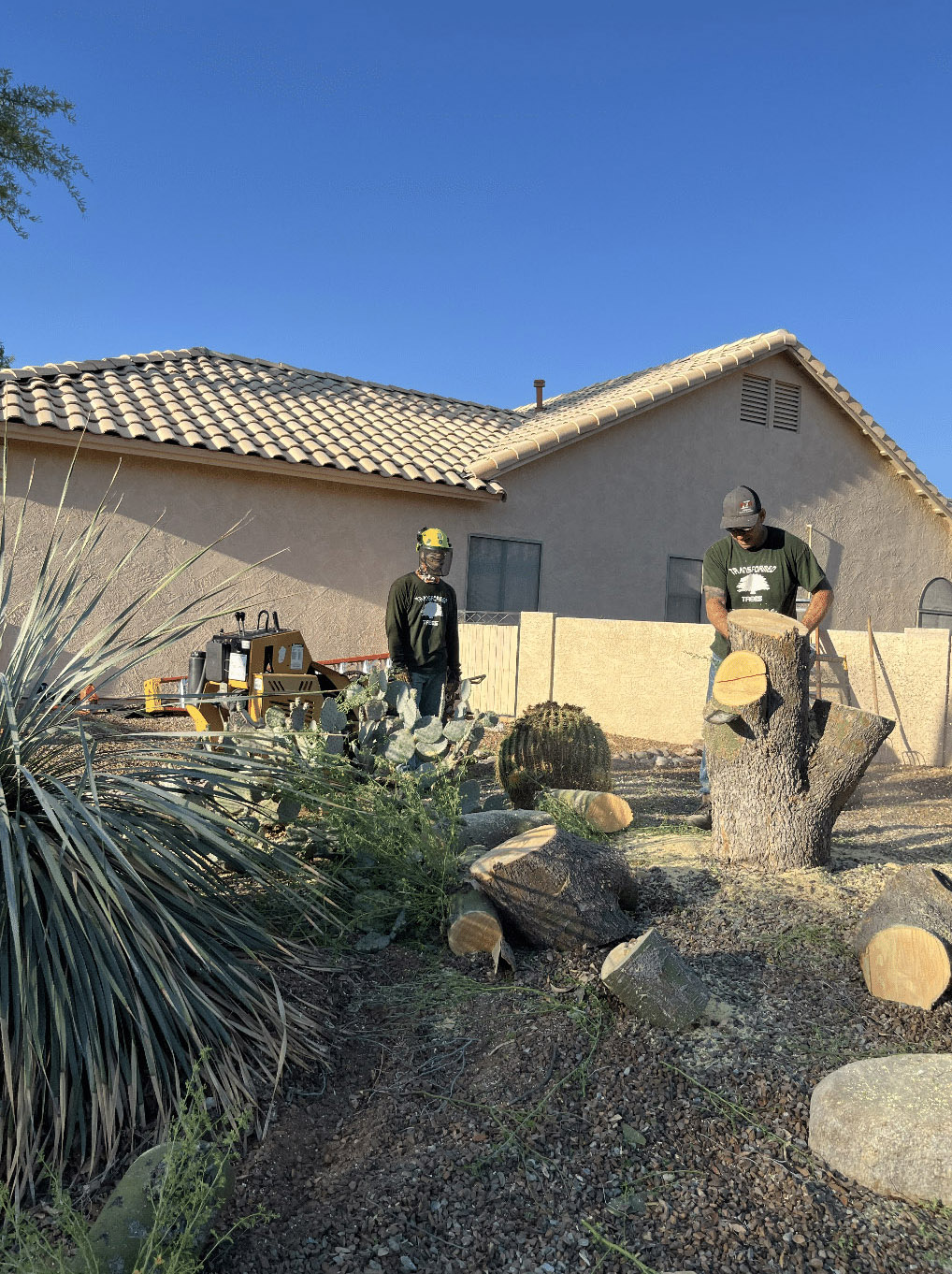
4. Pay Attention to the Root Zone
Monsoon rain changes desert soil conditions fast. Once the ground becomes saturated, roots may have less ability to hold a heavily loaded canopy in high wind. Runoff can also wash soil away or expose roots.
After the storm, look for disturbed soil, pooling water, erosion and newly visible roots. Also check whether irrigation lines have shifted or broken.
Do not pile extra soil, rock or mulch against the trunk in an attempt to stabilize a tree. That does not correct a damaged root system and can create new problems around the root flare.
5. Do Not Assume Every Damaged Tree Needs Removal
A storm-damaged tree is not automatically a lost tree. In many cases, selective tree pruning can address broken growth while preserving the rest of the tree.
In other cases, the trunk, major limbs or root system may be too compromised to retain the tree safely. That is why the choice between pruning, treatment, monitoring and tree removal should be based on the tree’s actual condition, not on how dramatic it looks from the street.
The right recommendation should come with an explanation of what failed, what can be preserved and what risk remains. Our guide to pruning, treatment, or removal walks through that assessment.
6. Watch for Problems That Appear Later
Not all monsoon damage announces itself immediately. Over the next several days and weeks, watch for:
- Wilting or unusual leaf loss.
- New canopy dieback.
- Branches that begin to sag.
- Bark that loosens around a crack or wound.
- Changes in the soil at the base.
- A lean that appears to be increasing.
Take a photo from the same safe location after the storm and again a few days later. That simple record can make a gradual change easier to see and easier to discuss with a tree-care professional.
What Can You Safely Handle Yourself?
Small twigs and loose debris already on the ground are usually a cleanup task. Large, elevated, hanging or tension-loaded branches are not.
Do not climb a storm-damaged tree, work from a ladder beneath a damaged canopy or attempt to pull down a suspended limb. Never approach a tree or branch in contact with a power line. Keep the area clear and contact the appropriate utility or qualified professional.
When you are unsure whether wood is under tension or whether the root system has shifted, step back. The safest inspection is one made from outside the potential fall zone.
When Should You Call a Tucson Tree Professional?
A professional evaluation is especially important when:
- A large limb is cracked or hanging.
- The tree has developed a new lean.
- Soil or roots have shifted at the base.
- The trunk or a major branch union has split.
- Damage threatens a home, vehicle, walkway or utility area.
- You cannot see the extent of the damage safely from the ground.
Smaller cosmetic damage may not require an immediate response. But when a large tree or a clear target is involved, it is better to have the condition assessed than to guess.
A Tucson Landscape Is a Connected System
Storm performance is not only about the branch that broke. Irrigation, soil conditions, pruning history, species and surrounding hardscape can all influence how a tree handles desert heat and monsoon weather.
A canopy that has been over-thinned may catch wind differently from a naturally balanced canopy. Shallow, frequent irrigation may encourage a different root pattern than deep watering. Erosion or a recent landscape project may change support around the root zone.
Looking at the whole property can help explain why the damage occurred and what may reduce future problems. Storm cleanup and monsoon recovery is often the right moment to address the underlying cause rather than only the symptom, alongside ongoing professional tree care in Tucson.
Need Help After a Tucson Monsoon?
If a storm has left you concerned about a tree on your property, Transformed Trees & Landscaping can help you evaluate what you are seeing and decide on the appropriate next step. Whether the answer is pruning, monitoring, other care or removal, the goal is a clear decision based on safety, tree health and the needs of the surrounding landscape.
We serve Tucson and the surrounding communities across Pima County. Request a free estimate or call (520) 445-1080.
FAQ: Inspecting Tucson Trees After a Storm
What should I check first after a storm?
From a safe distance, look for fallen or hanging limbs, a new lean, disturbed soil around the roots, fresh trunk cracks and damage near roofs, vehicles, walkways or utility areas.
How do I know if a tree is dangerous after a monsoon?
Warning signs include a new lean, lifted or disturbed roots, a cracked trunk or major branch union, and large broken or hanging limbs. The potential target also matters: damage over a home, vehicle, walkway or utility area deserves particular caution.
How long after a storm should I keep watching a tree?
Give it several weeks. Wilting, canopy dieback, sagging branches, loosening bark and an increasing lean can all appear well after the storm has passed.
Should I remove broken branches myself?
Small debris already on the ground may be manageable. Large, hanging, elevated or tension-loaded branches can be dangerous. Avoid working beneath unstable limbs and use professional help for significant damage.
Can a storm-damaged tree be saved?
Often, yes. Some trees can recover with appropriate pruning, monitoring or other care. Severe trunk, root or structural damage may make removal the safer option, so each tree should be evaluated individually.
A Note on Safety
This article is educational and cannot diagnose a specific tree from general symptoms. Any situation involving an unstable tree, a large hanging limb, a power line or an immediate hazard should be handled with appropriate safety precautions and qualified professional assistance.


