
A mature tree can be one of the most valuable parts of a Tucson property. It shades the patio, cools the house, gives wildlife a place to land and makes the yard feel established. So when that tree starts looking overgrown, stressed, damaged or unstable, removal can feel like an expensive, irreversible overreaction — or like the only responsible option. Neither instinct is a diagnosis.
The honest answer is that three different outcomes are on the table: pruning, treatment, or removal. Which one applies depends on the tree’s species, structure, overall health and location, along with what is happening in the soil and the rest of the landscape. In Tucson, prolonged heat, water stress, irrigation placement and sudden monsoon wind all shape what a tree needs next.
This guide walks through how that decision actually gets made. For the signs that point toward each outcome, our companion article covers how to tell if a Tucson tree needs pruning, treatment or removal.
First: Removal Is Not the Default
Tree removal should not be the automatic answer because a tree is large, messy or inconvenient. Many trees that look alarming can be preserved with thoughtful care, and a mature desert tree takes decades to replace.
Before removal is on the table, it is worth ruling out the two less drastic answers.
When Pruning Is Enough
Pruning is often the right move when a tree is fundamentally healthy but its canopy needs corrective or preventive care. Good pruning is not about making the tree as small as possible. It is about improving structure, removing compromised growth and helping the tree coexist safely with the home and yard around it.
A Tucson tree may benefit from professional tree trimming and pruning when you notice:
- Dead, broken, rubbing or weakly attached branches.
- Heavy limbs extending over a roof, driveway, walkway or other high-use area.
- A canopy that has become noticeably unbalanced or excessively dense.
- Branches interfering with a structure, visibility or access.
- Old storm damage that was never properly corrected.
- A need to reduce weight while preserving the tree.
Desert trees should not be treated like generic landscape material. Mesquite, palo verde and desert willow all respond differently to drought, irrigation, heat and pruning. Removing too much live canopy at once can expose bark and interior growth that were previously shaded from the desert sun.
The goal is not to remove the most growth. It is to make the right cuts for that tree.
When the Tree Needs Treatment Instead
Not every declining tree needs to come down. Sometimes the visible problem is a symptom of stress that can be corrected once the underlying cause is understood.
Signs that call for a closer health evaluation include:
- Thinning foliage or unusual leaf drop.
- Discoloration, dieback or isolated sections of declining canopy.
- Recurring insect activity or visible pest damage.
- Mistletoe or other parasitic growth.
- Cracks, wounds, cavities or areas of decay.
- Poor growth even though the tree is receiving regular irrigation.
- Soil that stays too wet or dries out too quickly.
- Irrigation that does not reach the tree’s active root zone.
The canopy is only part of the story. Roots, soil, irrigation, drainage, sun exposure and recent landscape changes all affect tree health. A tree planted in gravel beside reflected heat may respond very differently from the same species in a cooler, mulched planting area.
That is why our approach looks at the whole property instead of treating every symptom in isolation.
When Removal Is the Responsible Choice
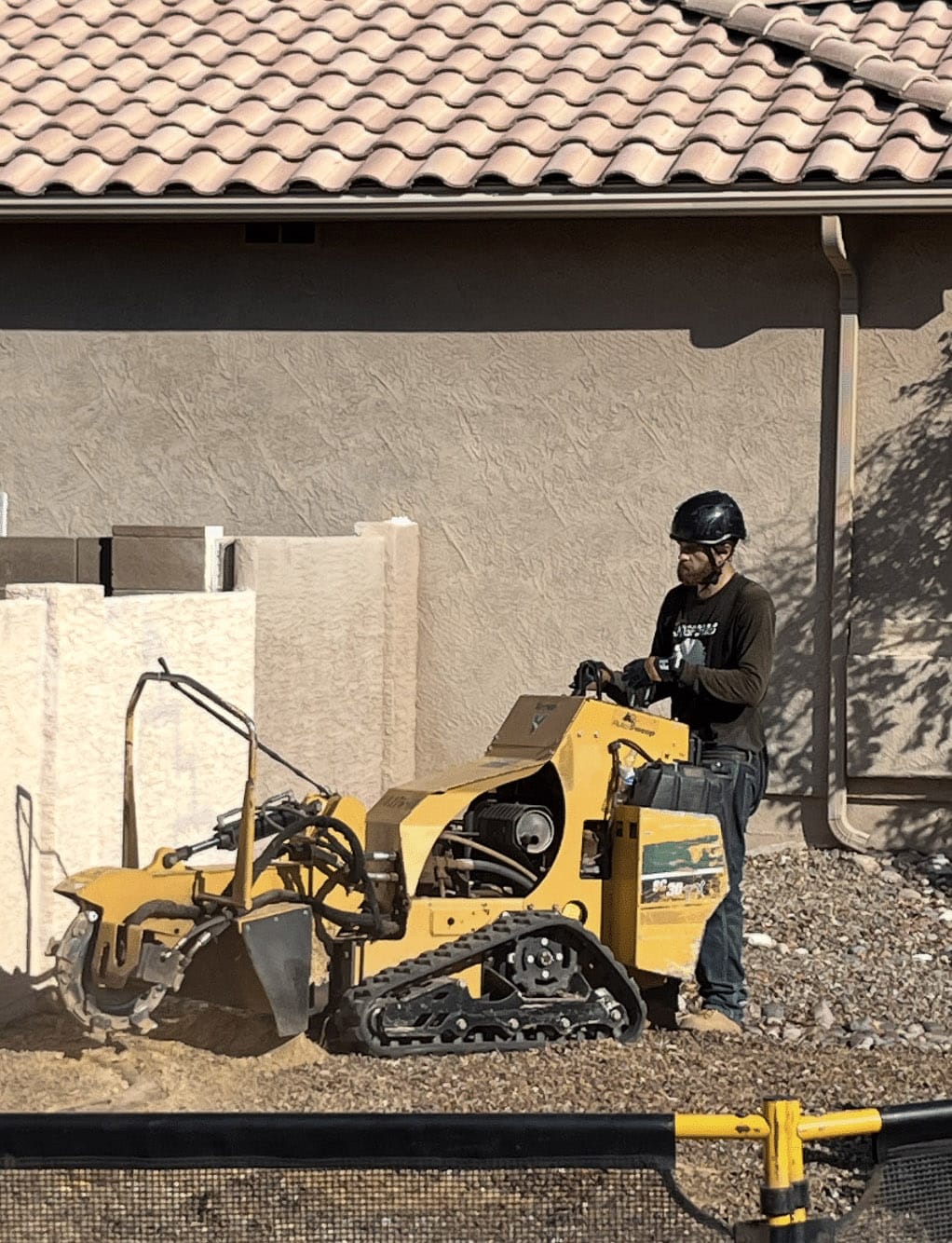
There are situations where removal and stump grinding become the safest and most responsible option.
An assessment may point toward removal when a tree has:
- Major structural failure or severe storm damage.
- Extensive decay affecting critical parts of the trunk or root system.
- A severe lean combined with root movement, cracking or other signs of instability.
- Large dead or dying sections over a home, walkway or other target.
- Irreversible decline with little reasonable chance of recovery.
- A conflict with a structure or essential infrastructure that cannot be corrected through responsible pruning.
This decision becomes especially important after a Tucson monsoon storm. A broken limb may be easy to see. A shifted root plate, altered canopy balance or newly opened crack can be much easier to miss, which is why a post-storm inspection is worth doing carefully.
If you suspect that a large tree is unstable, keep people and pets away from the area. Do not stand beneath damaged limbs or try to handle tension-loaded wood yourself.
What If a Tree Suddenly Starts Leaning?
A tree that has always grown at an angle is different from one that changes position after wind or saturated soil. A new or increasing lean deserves prompt attention, especially when the tree is aimed toward a house, street, vehicle or frequently used part of the yard.
From a safe distance, look for:
- Raised or cracked soil around the base.
- Newly exposed roots.
- A root plate that appears to be lifting.
- Fresh cracking where the trunk enters the ground.
- A canopy that has shifted noticeably after a storm.
Do not try to inspect a potentially unstable tree from underneath it. Give the area space and arrange for an on-site evaluation.
Why Tucson Conditions Change the Decision
Tree-care advice from a cooler or wetter climate does not always translate to Southern Arizona. Tucson trees live with intense sun, prolonged heat, low humidity, hardscape reflection, irrigation dependence and monsoon weather that can place sudden loads on the canopy and root zone.
Previous care matters, too. A tree that has been topped or over-thinned may react very differently to wind than one with a balanced, naturally developed canopy. An irrigation emitter placed beside the trunk may leave much of an established tree’s active root zone dry. Removing too much canopy can also expose bark that is not acclimated to direct summer sun.
Species, timing and site conditions are not side notes. They are part of the decision.
Five Questions to Ask Before You Decide
- Is the tree healthy overall? One damaged limb does not automatically make the whole tree a loss. On the other hand, a full-looking canopy does not guarantee that the structure beneath it is sound.
- Is the problem structural, biological or environmental? Pruning may help a structural problem. Treatment may address a health concern. Irrigation, drainage or soil changes may be part of an environmental problem.
- Has the tree changed recently? A new lean, fresh crack, rapid dieback or recent storm damage usually deserves more attention than a condition that has remained stable for years.
- What is underneath or around the tree? A questionable limb over an unused corner of the yard is different from the same limb over a bedroom, sidewalk, vehicle or commercial entrance.
- Can the tree be preserved responsibly? If pruning or treatment can reasonably preserve the tree without leaving an ongoing safety concern, preservation may be the better answer. If it cannot, removal may be appropriate.
A Good Assessment Should Explain the Why
Homeowners deserve more than “that tree has to come down” or “we can trim it.”
A useful assessment should explain what the arborist sees, what options are available, why the recommendation makes sense and what is likely to happen if the work is completed — or if the tree is left as it is.
That educational approach is central to our Tucson tree service. We want you to understand the tree, the recommendation and the role the surrounding landscape may be playing in the problem.
Need Help Deciding?
If a tree on your Tucson property looks overgrown, stressed, damaged or unsafe, you do not have to decide between pruning, treatment and removal before you call. That is what the assessment is for.
Transformed Trees & Landscaping provides practical, locally informed tree care throughout the Tucson area. Request a free on-site estimate or call (520) 445-1080.
FAQ: Deciding Whether to Remove a Tucson Tree
Does a leaning tree always need to be removed?
No. Some trees naturally grow at an angle. A new or increasing lean — especially when accompanied by lifted soil, root movement or cracking — is more concerning and should be evaluated promptly.
When should a tree be removed instead of pruned?
Removal may be appropriate when structural failure, extensive decay, severe root problems, irreversible decline or an uncorrectable conflict creates an unacceptable risk. The decision should consider the whole tree and what surrounds it.
Can a damaged tree be saved after a monsoon?
Sometimes. The answer depends on the amount of structural damage, root condition, species and overall tree health. Some damaged trees can be corrected or managed; others may be too compromised to retain safely.
How do I know if my Tucson tree needs pruning instead?
Pruning may be appropriate when a generally healthy tree has dead or damaged branches, an unbalanced canopy, excess weight or limbs interfering with structures and high-use areas. An on-site assessment can determine what work is appropriate for the species, season and location.
Why use an arborist for Tucson tree care?
Tree work involves more than cutting branches. An arborist evaluates species, structure, health, root conditions, seasonal timing and the effects that pruning or removal may have on the rest of the property before recommending work.
A Note on Safety
This article is educational and cannot diagnose a specific tree from general symptoms. Any situation involving an unstable tree, a large hanging limb, a power line or an immediate hazard should be handled with appropriate safety precautions and qualified professional assistance.


